Why Product Content Is the Powersports Channel's Hidden Conversion Killer
The powersports industry's biggest conversion problem isn't pricing, fitment, or shipping. It's product content. Here's the channel-wide fix.
TL;DR
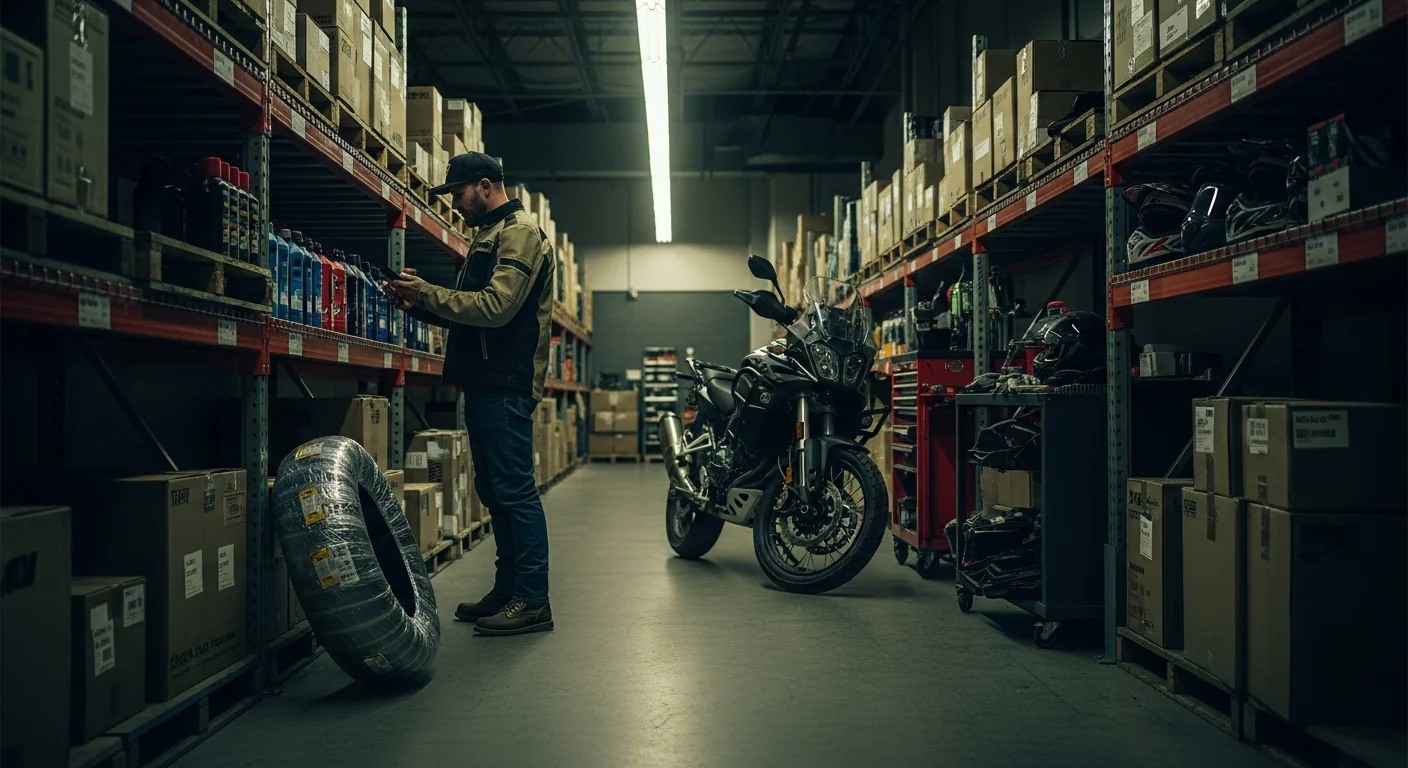
Bad product content is the single biggest unforced error in powersports right now. Brands ship to retailers, distributors, and DTC channels with weak imagery, no video, thin descriptions, and unclear fitment — and conversion drops at every stop. The fix is not a bigger creative budget. It is AI-assisted product content produced at industry speed, anchored by powersports operators who understand fitment, dealer merchandising, and DTC. Eight Foot Brands builds this content engine so the brand wins, the retailer wins, the dealer wins, and the rider gets what they came for.
The retailer’s complaint is the whole industry’s problem
A senior executive at one of the largest powersports retailers in the country said it plainly:
“Product content is the single biggest bottleneck in the industry. Brands consistently show up with weak imagery, no video, and thin product descriptions. It kills conversion for everyone.”
He is right. And he is not alone. Buyers at the top distributors say the same thing. DTC operators say it about their own catalogs. Dealers complain about the listings they inherit when they pull a brand into their store.
This is not a complaint about taste. It is a margin problem. When product content is weak, every channel partner downstream of the brand pays for it — in conversion rate, in returns, in support tickets, in shelf space lost to brands that did the work.
What “weak product content” actually means in powersports
Powersports is a fitment-driven, image-driven, trust-driven category. The buyer has to believe three things before they click buy: this fits my bike, this looks the way I want, this brand is real. Weak product content fails on all three at once.
The specific failure modes we see across hundreds of brand catalogs:
- One static studio shot per SKU. No angles, no scale reference, no lifestyle.
- No video. In a category where 70%+ of buyers research on YouTube before purchasing, a still image is not enough.
- Thin descriptions. “Premium materials. Sleek design.” That is not a product description. That is filler that survived a copy round.
- Missing or wrong fitment data. A jacket without armor specs. A helmet without DOT/ECE certification visible. A part without make/model/year coverage.
- No lifestyle context. The buyer cannot picture themselves in the product because the brand never showed them what that looks like.
Each one of these compounds. A jacket with one product shot, no video, and ambiguous sizing converts at a fraction of the rate of the same jacket photographed against three angles, demonstrated on a rider, and described with specifics. The product is the same. The content is not.
Why this is happening now (and why it didn’t matter as much five years ago)
The retail context shifted. Five years ago, a brand could ship a product to a dealer floor and let the salesperson tell the story. The salesperson saw the product, touched it, fit it on the customer, and answered the questions in real time. Product content carried less weight because human content carried more.
That model is breaking. Three forces are pulling the conversion moment online — even for products that ultimately get sold in dealerships:
- Dealer foot traffic is shifting. Buyers research, compare, and shortlist online before they ever walk in. The product page is now the silent salesperson.
- Marketplaces and big-box retailers (RevZilla, J&P, Cycle Gear, Amazon, Walmart) are absorbing more category transactions. Their algorithms reward listings with strong content. Brands without it slip down the search rank and disappear.
- DTC is no longer a side channel. It is where margin lives. And DTC conversion is a pure function of trust signals — most of which come from product content.
The brand that doesn’t fix this is not just losing DTC. It is losing dealer placement, marketplace ranking, and channel partner enthusiasm at the same time.
The dual-value reality: this isn’t a brand problem, it’s a channel problem
Here’s what brands miss when they think of product content as their own internal cost: every dollar a brand spends on better product content earns multiples back across the entire channel. The dealer’s listing improves. The distributor’s catalog improves. The marketplace ranking improves. The retailer’s category page converts better. The brand wins, but so does everyone selling it.
This is the conversation 8FB has been having with retailers and distributors for the past year. The smartest channel operators are not asking brands to spend more on advertising. They are asking brands to invest in the content that makes their products sellable everywhere they show up. That is the unlock.
What AI-assisted content production actually looks like
The instinct when a brand hears “AI-assisted content” is to imagine bad generative imagery and worse generated copy. That is not what works in powersports. The category is too technical, too fitment-driven, and too brand-loyal for fully synthetic content.
What works is a hybrid production model: human craft, AI scale.
- Real photography of real product, in studio and lifestyle environments — but supported by AI tools that handle background extension, color matching across SKU variants, and consistent lighting normalization across hundreds of shots.
- Real video shoots for hero products and category-defining lifestyle content — but supplemented with AI-assisted shorts that recut master footage into platform-native content (TikTok, Reels, YouTube Shorts) at a fraction of the cost.
- Fitment visualization — make/model/year-specific imagery generated with AI from a baseline product shot, so a buyer can see the helmet on their actual bike type rather than guessing.
- Product descriptions drafted by AI from a structured product spec sheet, then edited by humans who know the category vocabulary. Tenfold the throughput, same brand voice.
- Catalog operations that route content automatically into Shopify, Amazon, marketplace feeds, and dealer DAM systems — so the same asset library powers every channel without per-platform rework.
This is the production model 8FB has been building inside Studio Services and now packages as a dedicated engagement: the Product Content Engine.
The result, when it’s done right
Brands that fix product content systematically tend to see four outcomes within 60–90 days of deployment:
- DTC conversion lift in the 18–35% range on the SKUs that get the upgraded treatment first.
- Marketplace ranking improvements — listings climb because retailers’ algorithms reward listings with full media, complete fitment data, and rich descriptions.
- Channel partner enthusiasm — dealers and distributors actively request the upgraded brands, because their own conversion improves on the back of it.
- Lower return rate — better fitment visualization and clearer product detail mean fewer “this isn’t what I expected” returns.
These are not speculative numbers. They are the pattern we see when brands invest in the content layer instead of patching around it.
Key Takeaways
- Weak product content is a channel-wide tax. The brand pays for it, the retailer pays for it, the dealer pays for it, and ultimately the rider pays for it in lower-quality listings.
- The four failure modes are predictable: one product shot per SKU, no video, thin descriptions, and missing fitment data. If a catalog has any of the four, conversion is suppressed.
- AI-assisted production is not synthetic content. It is real photography and video amplified by AI tools that handle scale, variants, and platform-specific recuts.
- Powersports is a fitment-driven category, and product content has to answer the buyer’s three questions: does it fit, does it look right, is the brand real.
- The channel benefits compound. A brand that invests in better product content sees lift across DTC, marketplace, and dealer placement at the same time — not just on its own site.
- The fix is operational, not creative. It requires a content engine, not a one-off photoshoot.
FAQ
What is causing the powersports product content problem?
The combination of fragmented retail (DTC + dealer + distributor + marketplace), buyers shifting research online before any in-person experience, and most brands operating with creative budgets sized for the era when dealers carried the conversion weight. Brands that built their catalogs five years ago are running on content that no longer matches how riders actually buy.
Is AI-generated product imagery acceptable in powersports?
Fully synthetic product imagery is not yet acceptable in this category — buyers can spot it, and trust drops. What works is real photography augmented by AI: background variations, fitment visualization on different vehicle types, color/variant matching, and platform-specific recuts of real video footage. Eight Foot Brands’ approach is hybrid by design.
How fast can a brand actually rebuild its product content?
A focused 30–60 day sprint can transform the top 50–100 SKUs (the ones driving 80% of revenue) with full media: multi-angle photography, video, lifestyle context, fitment data, and rich descriptions. The full catalog typically takes 90–180 days depending on size. The Product Content Engine is built around that sprint cadence.
Does this only help DTC, or does it help dealer and distributor channels too?
It helps all of them. Better product content lifts DTC conversion directly, but it also improves marketplace ranking, dealer-listing quality, and distributor catalog merchandising. This is why retail and distributor executives are asking brands to invest in content — they understand the channel-wide upside.
What does engagement with Eight Foot Brands look like for this work?
It starts with a 30-minute conversation — no proposal pressure, no pitch deck. We listen to the catalog problem, look at the actual product pages and listings, and tell you what’s working and what isn’t. If there’s a fit, we structure a content engine engagement that matches the catalog scale and channel mix. The first goal is always to make the problem go away.
Co-authored by Joyce Tanaka (Ecommerce Retail Expert), Mary Chen (AI GTM Engineer), and Brett Halvorsen (Powersports Brand & Creative Director) — three lenses on the same channel reality.
→ See how Eight Foot Brands packages this work: Product Content Engine → Or skip ahead and see the campaign offer: Fix the channel killer in 30 days
Keep going
Leveraging AI/AEO to Futureproof Powersports. The Clock is Ticking.
Under-capitalized, tight-margined, and proudly analog — powersports has sat out every tech wave and mostly gotten away with it. This one is different: when customers send their own agents to shop, a site without an AEO foundation is simply closed.
Dealers Own the Customer. Brands Own the Product. Nobody Owns the Relationship.
Dealers own the customer file. Brands own the product. The relationship in between is sitting on the floor. Here's how to pick it up — channel-wide — without going around your dealers.
The Real Deal at the Helm: Why Mike Kennedy Is the Right Leader for the New Era of Indian Motorcycle
When Carolwood took Indian Motorcycle independent from Polaris, they didn't hand a 125-year-old brand to a spreadsheet-driven outsider. They named Mike Kennedy — a lifelong biker and 35-year powersports leader who's worked the OEM, aftermarket, and retail sides of the business. Here's why that's the right call.