Leveraging AI/AEO to Futureproof Powersports. The Clock is Ticking.
Under-capitalized, tight-margined, and proudly analog — powersports has sat out every tech wave and mostly gotten away with it. This one is different: when customers send their own agents to shop, a site without an AEO foundation is simply closed.
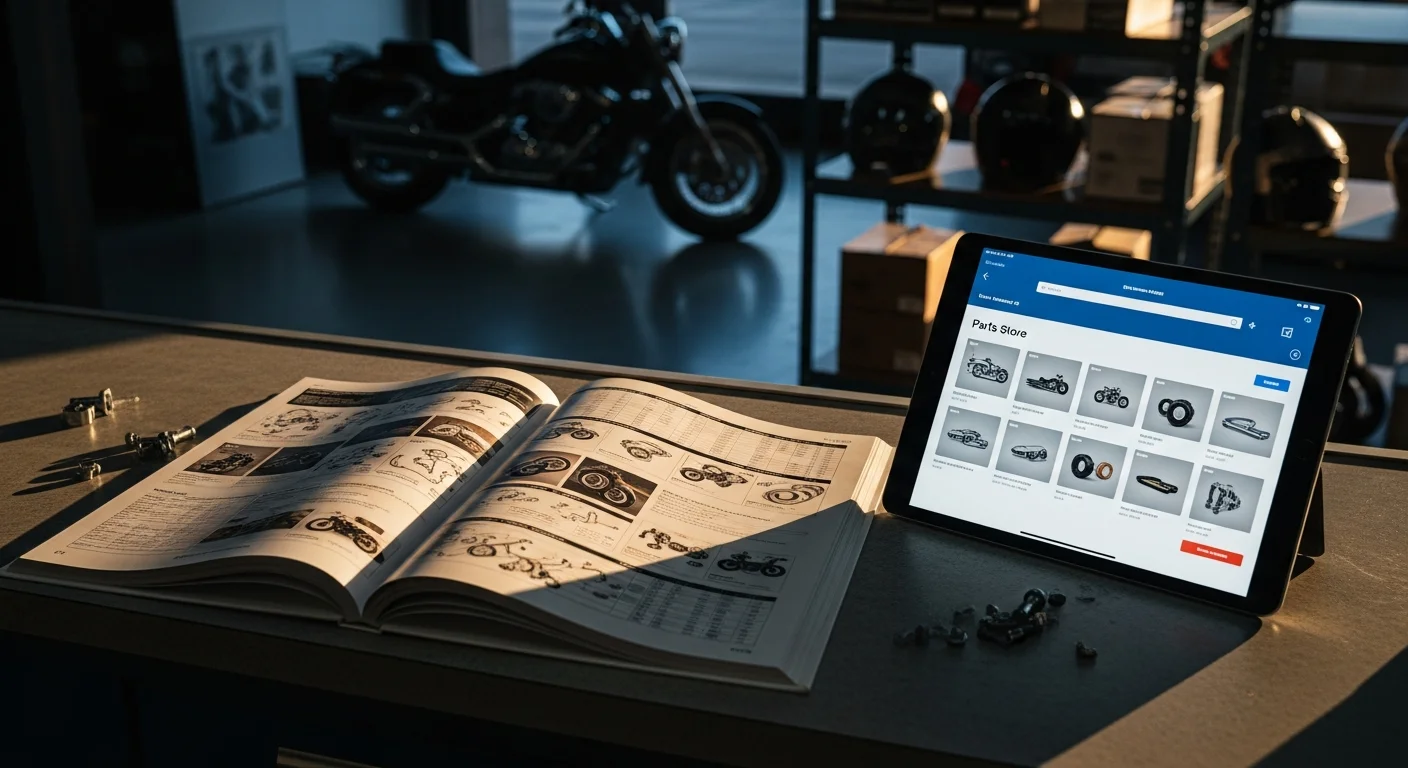
TL;DR: Powersports has never been an early adopter of business technology — under-capitalization, tight margins, and a cultural preference for analog expertise have made adoption glacial through every previous wave. AI and Answer Engine Optimization break that pattern because they return force-multiplying gains at modest scale: demand forecasting that frees working capital, fitment verification that kills costly returns, and content structured so answer engines cite you instead of a competitor. What makes this wave different is agentic shopping — when customers send their own agents to buy, an e-commerce site without an AEO foundation is functionally closed.
Early Adopters We Ain’t
Whether the industry is ready or not, AI/AEO is here now, with true agentic capability right around the corner. But are we really prepared to leverage this new game-changing tech? If I’ve learned anything in my time in powersports aftermarket, it’s that, if we’re being honest, as an industry, we’re typically not at the forefront when it comes to the rapid adoption of cutting-edge digital technology.
As an industry, early adopters we ain’t. Let me clarify: this is not to say that, with regard to product and brand innovation/development, there aren’t numerous brands in powersports at the bleeding edge of their segments. Obviously there are, and the list is nearly endless: Alpinestars, Cardo, 100% Racing, Dunlop, Shoei, Ohlins, Akrapovic, and hundreds of other brands are all world-class innovators in their own right.
What I’m suggesting is that when it comes to leveraging new digital technology to innovate business operations or adopting new process methodologies, we in powersports have historically tended to “lag”. In some cases we’ve even actively resisted innovation at scale to the detriment of sustainable growth. And just why is that? What are the root causes of powersports tendencies toward slow rates of tech adoption?
The Root Causes of Glacial Adoption
First and foremost, many powersports aftermarket companies from OE dealers, independent retailers, product brands, and distributors tend to be chronically under-capitalized small businesses operating with tight margins and limited access to growth capital. While that landscape has been evolving in the past decade with the influx of PE capital, the above dynamic is pretty much the norm.
Unlike our cousins in the automotive space or tech sectors, on balance powersports hasn’t benefited from the same scale-driven innovation cycles. As we know, tech adoption during previous waves, such as early e-commerce platforms (our first one at CG wasn’t exactly “Amazon-esk”), digital inventory systems, or advanced diagnostic tools, was hit or miss, and always behind the curve.
Ask any powersports business owner why the adoption of new tech has historically been glacial, and they’re likely to cite high upfront costs, steep learning curves, fear of disrupting proven workflows, and a cultural preference for hands-on “analog expertise”. There’s a reason distributors still depend on print catalogs to move the goods. Unfortunately, in a time of rapid technological acceleration, this inertia risks turning a strength (community/customer focus) into a vulnerability (market irrelevance).
The Clock Is Ticking
Fast forward to today, and the clock is ticking. The rate and pace of change is simply unprecedented. The powersports aftermarket cannot afford to sit on its hands, or worse, resist the generational changes on the horizon. Widespread adoption of artificial intelligence (AI) and Answer Engine Optimization (AEO) could not only address age-old challenges but also fundamentally future-proof the sector, notwithstanding our industry’s historical reluctance to readily and rapidly embrace major technological shifts.
What AI and AEO Actually Deliver
AI and AEO offer a compelling path forward precisely because they can deliver “force-multiplying” returns even at modest scales and with reasonable investment. Current AI solutions tend to encompass a broad toolkit, for example: predictive analytics for inventory, machine learning for personalized recommendations, computer vision for fitment verification, and generative tools for marketing content.
AEO, the optimization of content for AI-powered “answer engines” like ChatGPT, Google Gemini, Perplexity, and emerging search interfaces, ensures businesses appear in conversational, intent-driven queries rather than traditional keyword-ranked results. Together, they represent a shift from reactive selling to proactive, data-informed engagement. And with end-use customers soon to engage their own “agents” to do their shopping for them, ignoring AEO capabilities will effectively put a “closed” sign on a given e-commerce site.
Inventory Management: The Perennial Headache
Consider inventory management, a perennial headache in the aftermarket where SKUs proliferate across OE make/model/years. AI-driven demand forecasting can analyze historical sales, seasonal trends, regional riding patterns, vehicle parc data (or VIO), and even macroeconomic signals to predict which parts will move and when. For a small shop stocking thousands of items, this reduces overstocking of slow-movers and stockouts of high-demand upgrades, freeing up critical working capital.
For a multi-line distributor with tens of thousands of SKU’s in stock at any given time, the benefits are even greater. In the broader automotive aftermarket, similar systems have already demonstrated efficiency gains in supply chains handling millions of SKUs. Powersports, with its enthusiast-driven variability, stands to benefit even more.
Customer Experience Will Transform
Customer experience will transform dramatically too. AI-powered chatbots and virtual assistants, trained on shop-specific data, can handle routine inquiries 24/7—recommending compatible exhaust systems for a specific bike model or suggesting maintenance schedules based on mileage and riding style.
Generative AI can create detailed product descriptions, installation videos, or even augmented reality previews of custom builds, enhancing online presence without requiring large marketing teams. For dealerships and aftermarket specialists, AI fitment tools can instantly verify compatibility, reducing costly returns—a major pain point for both distributors and retailers.
AEO and the End of the Blue Links
AEO takes this even further by positioning businesses in the new search/discovery landscape. As consumers increasingly ask AI tools “What’s the best aftermarket exhaust system for my 2025 Yamaha R1?” or “Recommend reliable UTV suspension upgrades under $2,000 near me,” optimized content reveals a retailer’s expertise/product availability directly in its answers. This isn’t traditional SEO; it requires structured data, authoritative content, real-time inventory signals, and transparent expertise that AI models trust and cite. Gone will be the “blue links” of the past.
Overcoming the Adoption Obstacle
The futureproofing benefits will compound at the industry level, while overcoming the adoption obstacle will require targeted strategies. For instance, industry associations, manufacturers, and larger distributors should play a leading role: offering training workshops while sharing success stories from early AI adopters in the powersports ecosystem—demonstrating quick ROI through efficiency or sales lifts—can build momentum. Most importantly, adoption must respect the industry’s culture: framing AI as an enhancer of human expertise, not a replacement for the trusted mechanic or sales advisor who “gets it.”
Our Best Days Are Ahead
The powersports aftermarket’s resilience has always stemmed from adaptability and community. We will find a way to adopt this new, game-changing tech without straying from the passion for the sport that is the hallmark of the powersports industry. I have no doubt that our best days are ahead. I founded Eight Foot Brands (eightfootbrands.com) precisely to bridge the gap between today and the amazing new AI/AEO driven paradigm that awaits. We aim to partner with those brands who share our vision of enhanced business operations, world-class customer experiences, and value creation never seen in our industry before. The future is going to be one hell of a ride. What are we waiting for……
Ride Hard, Take Chances
— Hank
Key Takeaways
- Powersports’ slow tech adoption is structural, not attitudinal — chronically under-capitalized businesses running tight margins with limited growth capital have rational reasons to wait out a technology wave.
- The industry’s greatest strength becomes its vulnerability when inertia hardens into resistance. Community and customer focus that once read as discipline now risks reading as market irrelevance.
- AI and AEO are adoptable at powersports scale precisely because they deliver force-multiplying returns on modest investment — the economics that blocked previous waves don’t block this one.
- Inventory is where the payback shows up first. Demand forecasting against historical sales, seasonal trends, regional riding patterns, and vehicle parc (VIO) data frees working capital for shops and multi-line distributors alike.
- AEO is a different discipline from SEO, not an extension of it. It runs on structured data, authoritative content, real-time inventory signals, and expertise that AI models will trust and cite.
- Agentic shopping raises the stakes from ranking to existence. When customers dispatch their own agents to buy, an e-commerce site without an AEO foundation is functionally closed.
Frequently Asked Questions
Why has the powersports industry been slow to adopt new technology? In powersports, slow adoption traces to structural economics more than stubbornness. OE dealers, independent retailers, product brands, and distributors are frequently under-capitalized small businesses running tight margins with limited access to growth capital, which makes high upfront costs and steep learning curves a genuine risk. Add a cultural preference for hands-on analog expertise and the pace stays glacial.
What is Answer Engine Optimization (AEO) in powersports? Answer Engine Optimization is the practice of structuring content and data so AI answer engines — ChatGPT, Google Gemini, Perplexity, and emerging search interfaces — surface and cite your business in conversational, intent-driven queries rather than traditional keyword-ranked results. In powersports it depends on structured fitment data, authoritative content, real-time inventory signals, and expertise the models will trust.
How does AI help with powersports inventory management? In the powersports aftermarket, AI-driven demand forecasting analyzes historical sales, seasonal trends, regional riding patterns, vehicle parc (VIO) data, and macroeconomic signals to predict which parts will move and when. For a small shop it cuts overstocking of slow-movers and stockouts of high-demand upgrades. For a multi-line distributor carrying tens of thousands of SKUs, the working-capital effect is larger still.
Will AI replace the trusted mechanic or sales advisor in powersports? No. Eight Foot Brands sees AI in powersports as an enhancer of human expertise, not a replacement for it. The industry’s advantage has always been people who understand the rider, the machine, and the terrain — AI takes the routine work off their plate and makes that expertise reach further.
What should a powersports brand do first to prepare for agentic commerce? Start with the data layer: clean fitment attributes, real-time inventory signals, structured product content, and direct answers to the questions customers actually ask. When end-use customers send their own agents to shop, a site without that foundation is invisible to them no matter how it ranks in traditional search.
What does Eight Foot Brands do for powersports brands adopting AI? Eight Foot Brands is a brand acceleration studio focused on powersports and adventure lifestyle. It was founded to bridge the gap between how the industry operates today and an AI/AEO-driven model — partnering with brands across strategy, creative, product, and commerce under one roof rather than splitting the work across vendors.
Keep going
How AI and AEO Will Eclipse SEO in Powersports E-Commerce
Shoppers don't type keywords anymore — they ask questions. AI synthesizes the answers, often without a click. For powersports retailers and brands, AEO isn't a bolt-on to SEO. It's a cultural shift toward being the cited authority, not the top blue link.
Powersports' Quest for Smarter Inventory Management Post-COVID
The days of COVID-era shortages are gone, but the hangover remains. Bloated inventories, compressed margins, and a fundamental shift in risk tolerance are forcing powersports dealers, distributors, and retailers to rebuild inventory strategy from first principles. The winners are treating inventory as a precision tool, not a volume bet.
The Future of the Powersports Aftermarket in the Coming Age of Disruption
The global powersports aftermarket is projected to grow from $12B to over $21B by 2034. But the drivers of that growth are shifting. Three intersecting forces — AI, private equity, and Gen Z — will determine who wins, who gets consolidated, and who disappears.